

For centuries, technological progress has been defined by human efforts to build tools that reduce physical labor. From the waterwheels of antiquity to the steam engines of the Industrial Revolution, innovation has systematically shifted mechanical burdens from human muscles to machines. However, the current era of technological evolution is characterized by a fundamentally different transformation. Modern progress is no longer just about automating physical strength; it is about automating intellect, decision-making, and complex workflows.
The rise of automation in modern technology represents a profound paradigm shift across global industries. Driven by breakthroughs in computational power, artificial intelligence, and interconnectivity, automated systems are transitioning from passive execution machines into adaptive, autonomous entities. This shift is reshaping the global workforce, redefining corporate efficiency, and altering the daily lives of consumers. This comprehensive analysis explores the underlying mechanisms driving modern automation, its manifestations across key sectors, and the broader socioeconomic implications of an increasingly autonomous world.
The Convergence of Driving Technologies
Modern automation does not rely on a single breakthrough. Instead, it is the product of several distinct technological trajectories converging simultaneously. This convergence has allowed automated systems to move beyond rigid, pre-programmed tasks and handle environments characterized by variability and unpredictability.
Artificial Intelligence and Machine Learning
Traditional automation was deterministic. A machine followed a strict set of rule-based instructions, meaning if an unexpected variable occurred, the system would fail. Machine learning algorithms have eliminated this limitation. By training on massive datasets, contemporary systems can identify patterns, learn from experience, and make autonomous decisions when confronted with novel scenarios. This cognitive layer allows automation to handle unstructured data, recognize visual inputs, and process human language.
Robotic Process Automation
Within corporate environments, robotic process automation handles the digital tasks that once occupied countless hours of human labor. These software robots mimic human interactions with digital systems, such as logging into applications, moving files, extracting data from invoices, and filling out forms. By handling high-volume, repetitive digital tasks, this technology bridges the gap between legacy software systems and modern, streamlined workflows without requiring massive infrastructure overhauls.
The Internet of Things and Edge Computing
For automation to function effectively in the physical world, machines must sense and interact with their surroundings. The proliferation of industrial sensors has created interconnected networks where machines communicate with one another in real time. Combined with edge computing, which processes data locally on the device rather than sending it to a distant cloud server, automated systems can react to environmental changes within milliseconds. This split-second processing capability is essential for safety-critical applications like autonomous transportation and automated manufacturing.
Sector-Specific Transformations
The footprint of modern automation can be seen across virtually every sector of the global economy. While the core algorithmic principles remain similar, the physical and practical execution varies significantly by industry.
Smart Manufacturing and Industry 4.0
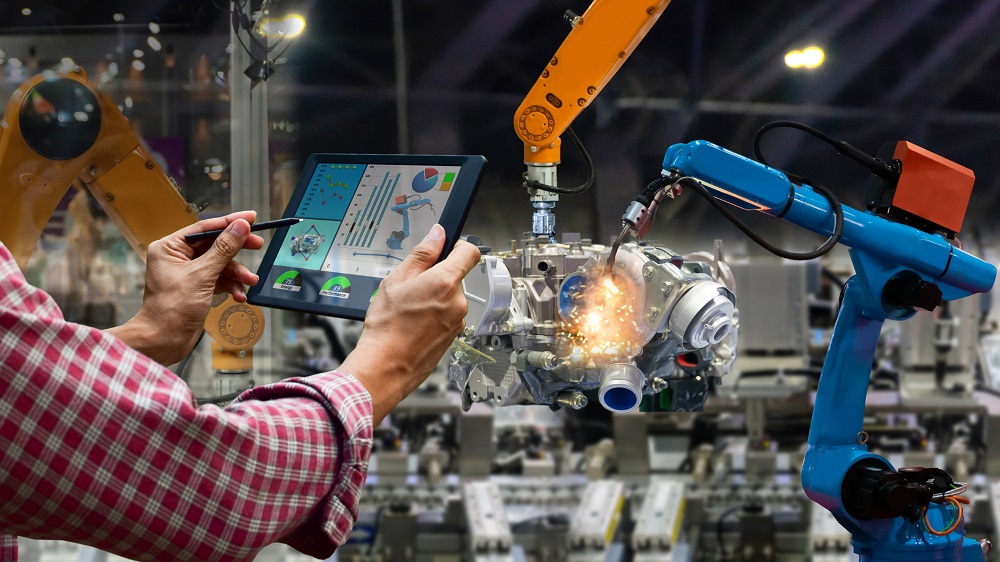
The manufacturing sector has long been an early adopter of robotics, but the modern smart factory goes far beyond traditional assembly-line arms. Today, factories utilize autonomous mobile robots that navigate warehouse floors dynamically, calculating optimal routes to deliver materials without human intervention.
Furthermore, predictive maintenance systems monitor the acoustic vibrations, temperature, and electrical currents of machinery. By analyzing this sensory data, automated platforms can predict exactly when a mechanical component is about to fail, automatically scheduling a maintenance window and ordering replacement parts before a costly breakdown occurs.
Logistics, Supply Chains, and Fulfillment
E-commerce demands speed, accuracy, and around-the-clock operation, making the logistics sector a prime candidate for extensive automation. In modern fulfillment centers, automated storage and retrieval systems manage inventory with mathematical precision.
Software algorithms organize items based on buying patterns, placing frequently purchased goods near dispatch zones to minimize travel time. On the open road and in shipping ports, automated freight tracking, automated inventory scanning drones, and pilot programs for autonomous shipping vessels are streamlining the global movement of goods.
Enterprise Operations, Finance, and Customer Support
Beyond the factory floor, automation has deeply penetrated white-collar environments. In financial institutions, automated compliance systems scan thousands of international transactions every second, identifying potential fraud or money-laundering patterns using predictive risk modeling.
In customer service, advanced conversational interfaces handle routine tier-one support inquiries, resolving billing questions and tracking shipments instantly. This leaves human agents free to focus entirely on complex, emotionally sensitive customer escalations.
The Socioeconomic Implications of an Autonomous World
As automated systems become more capable, they spark intense debate regarding their long-term impact on society, employment structures, and economic equality. This transition presents a duality: it offers immense potential for wealth creation and safety, while simultaneously threatening traditional employment security.
-
Workforce displacement and skill polarization: Automation disproportionately impacts routine tasks, whether manual or cognitive. This creates a labor market polarization where demand increases for high-skill analytical roles and low-skill interpersonal roles, while middle-income operational jobs decline.
-
The emergence of the augmented worker: Rather than facing complete replacement, many professionals are experiencing job mutation. Workers use automated tools to handle mundane subtasks, allowing them to focus on high-level strategy, creative design, and human-centric collaboration.
-
Economic concentration and regulatory challenges: Organizations that successfully deploy advanced automation scale rapidly with minimal variable costs. This efficiency can lead to severe market concentration, where a handful of tech-driven enterprises dominate entire sectors, creating unique regulatory hurdles for antitrust and labor protections.
Navigating the Future of Autonomy
The rise of automation is an irreversible trend driven by the structural demands for economic efficiency, safety, and precision. The challenge for modern society is not determining how to stop automation, but establishing how to integrate it responsibly.
For corporations, this requires investing heavily in worker upskilling initiatives, shifting human capital into roles that require emotional intelligence, complex problem-solving, and cross-disciplinary critical thinking. For educational institutions, it demands a departure from rote memorization toward teaching computational literacy and adaptive learning skills. Ultimately, automation should be viewed not as a rival to human capability, but as a powerful amplifier of human potential.
Frequently Asked Questions
What is the precise technological difference between automation and artificial intelligence?
Automation refers to the broad practice of using technology to perform tasks without human intervention, which can be accomplished through simple, rigid, rule-based programming. Artificial intelligence, by contrast, is a specific branch of computer science focused on creating systems capable of simulating human intelligence, such as learning, reasoning, and self-correction. In short, automation focuses on execution, while artificial intelligence focuses on cognition and adaptability.
How does modern automation impact the carbon footprint of industrial operations?
Modern automation generally optimizes energy consumption and material waste, which can reduce industrial emissions. Automated environmental controls, precision agricultural machinery, and optimized logistics routing minimize fuel and electricity usage. However, the massive data centers required to process artificial intelligence models and run complex automated networks require immense electrical power, creating a secondary environmental challenge that engineers must solve through green energy integration.
What is functional safety in the context of human-robot collaboration?
Functional safety refers to the engineering discipline that ensures automated systems and collaborative robots can operate safely alongside human workers. This involves equipping machinery with sensitive force-torque sensors, laser scanners, and redundant emergency cutoff systems. If a human enters a machine’s operational envelope or makes physical contact with a collaborative robot, the automated system instantly slows down or halts its movement to prevent injury.
Can creative industries such as architecture and literature be fully automated?
Creative industries are experiencing significant disruption from generative algorithms that can produce blueprints, music, and text based on historical prompts. However, complete automation is unlikely because true creativity relies on shared human experience, emotional nuance, cultural context, and intentionality. Automated tools in creative fields function best as collaborative instruments that accelerate brainstorming and drafting rather than replacing human artistic vision.
How do automated algorithms introduce or perpetuate bias in hiring processes?
Automated screening tools evaluate applicants by comparing their profiles against historical data from past successful employees. If the historical data reflects past human biases, systemic exclusions, or skewed demographics, the algorithm will internalize these patterns as markers of quality. Consequently, the automated system will systematically penalize diverse candidates, demonstrating that automated tools can replicate and amplify human prejudices if left unchecked.
What is hyperautomation, and how does it differ from standard automation?
Hyperautomation is a strategic approach where an organization identifies, vets, and automates as many business and IT processes as possible using a combination of technologies. While standard automation focuses on optimizing a single task or isolated workflow, hyperautomation integrates robotic process automation, artificial intelligence, process mining, and low-code tools to create a completely connected, self-optimizing corporate infrastructure.
How does automation alter the economic stability of developing nations?
Historically, developing nations achieved economic growth by leveraging abundant, low-cost labor pools to attract manufacturing and textiles. As automation becomes cheaper and more efficient than human labor, multi-national corporations are increasingly moving production facilities back to developed nations, a process known as reshoring. This shift threatens to disrupt traditional economic ladders, forcing developing nations to pivot their economies toward digital services and local value creation.
Comments are closed.